By: Stephen Welty
Globalization is useful for opposing militarism and corruption, uniting those who feel each other’s grievances — about hierarchy, economics, and class prejudice — and respond with empathy, calling for justice [FOSNA 9-10]. For instance, we see the call to terminate the Israel-Hamas War. [The American Prospect, Meyerson] Globalization circulates more than just dissent; it facilitates development, cultural understanding and diplomacy. Scoffing at an open-handed policy in favor of “fists-up,” this presidential term has seen USAID handicapped by US hubris. [Carnegie Endowment for International Peace, “Perspectives on Regional Security in the Middle East,” 12 June 2025] Anybody who does not extend an open hand, whether out of spite or because they only know their own community, has no excuse for letting selfishness or insularity rule their actions. Generally, we have the means to travel, and should experience the world, edifying, respecting and working with people. Journalism is likewise essential for educating, opening horizons, and advocating for human rights.
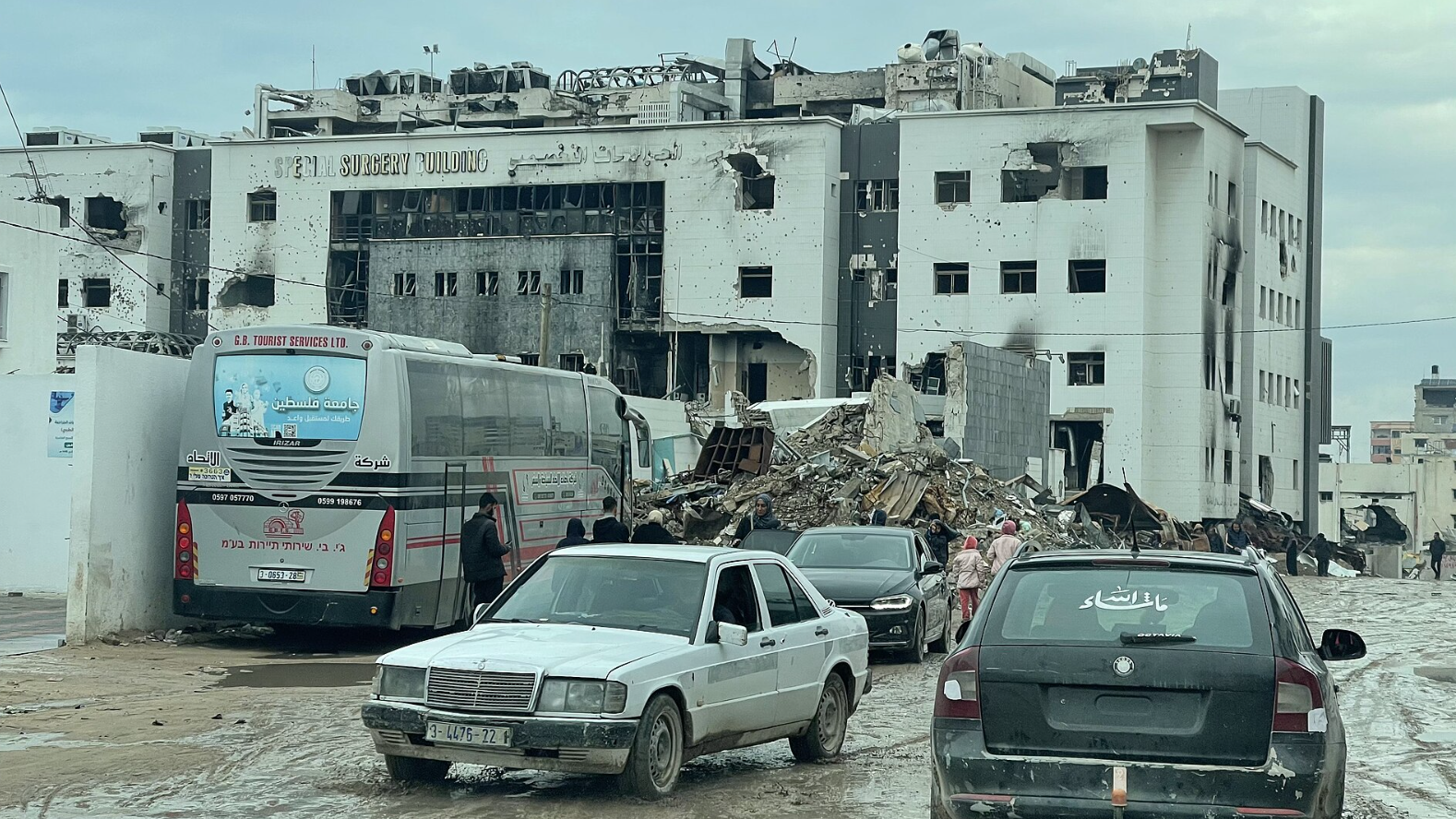
“[I]n late August 2025 IDF jets strafed a hospital in Khan Younis, a part of Gaza. As a result of the assault, 5 correspondents were cut down”
This makes fomenting fear among media members, and either being culpable for or orchestrative in their slaying, a profound stain on the hands of the IDF — the apartheid, genocide and blockade-imposing troops of Israel — and raises questions that involve evidence of more than isolated war crimes. For example, in late August 2025 IDF jets strafed a hospital in Khan Younis, a part of Gaza. As a result of the assault, 5 correspondents were cut down [NPR, Baba et. al]. What is more, the Committee to Protect Journalists meticulously debunks the idea that media casualties have been inflicted because the persons have aided, abetted, or joined Hamas. According to the watchdog, “‘Israel is engaging in the deadliest and most deliberate effort to kill and silence journalists that CPJ has ever documented’” [NPR, Batrawy]. This indignation is echoed by 250 organizations of war correspondents. [NPR, Batrawy]. This places in serious question that military’s commitment to the tenet of distinction, a pillar of the laws of war. Such brutality is an existential strike by a regime against openness and consequences for themselves. One document which bulwarks journalist safety — Protocol 1, an amendment of the 1949 Geneva Conventions– is part of the canon of International Humanitarian Law overseeing hostilities. Specifically Article 79 names them “civilians” with all the accompanying legal footing [Geneva Conventions… (Protocol 1), 284]. This footing includes Article 51, entitling civilians to be shielded from harm at the hands of armed outfits. Reckless, “indiscriminate” collateral harm to civilians is also criminalized [Geneva Conventions… (Protocol 1), 265]. Therefore, it is a crime for the IDF to harm news reporters, whether through negligence or deliberate schemes. This declaration is true in the event that the reporters are not premeditated or non-premeditated combatants, per the Third Geneva Convention [“Geneva Convention Relative to the Treatment of Prisoners of War,” 82-83]. As journalist allies, we must name IDF crimes, and, second, support justice work through the written and spoken word, expanded upon next.
“[G]lobalization both opens eyes and ears, and trains us to think of journalist, and human, rights”
Journalist voices occupy one row of a global chorus, where as my geopolitics professor, BE, (initials a pseudonym) relayed: Someone’s viewfinder can work to level biased hierarchies if it is honed in on less heeded personal stories of economic or wartime struggle, rather than the broader more dominant narratives centered around national agencies, movements of standing armies, and corporate moneyflow. It is necessary to address all these catalysts, however special devotion to human rights is the highest honor [Hyndman, 276-277, Konrad 260-261]. Diversity does this work by diluting the most influential, i.e. “biggest and most powerful” voices in a group (most moneyed, or most White Anglo-Saxon oriented, for example). Diversity awareness is a positive of globalization, and is something that good journalism heeds and addresses. So, globalization both opens eyes and ears, and trains us to think of journalist, and human, rights.
Sources:
[1] “Israeli strikes kill 22, including 5 journalists, in a Gaza hospital,” NPR, 01-12-2026.
[2] “Media outlets demand Israel grant access to Gaza, halt attacks on journalists there,” NPR, 01-13-26. Date accessed: 13 Jan. 2026.
[3] “Perspectives on Regional Security in the Middle East,” Carnegie Endowment for International Peace, 06-12-25.
[4] “Municipal Divestment Organizing Guide,” Friends of Sabeel North America, 01-26-26.
[5] “Geneva Convention Relative to the Treatment of Prisoners of War,” International Human Law, 08-12-49.
[6] “Beyond Either/Or: A Feminist Analysis of September 11th,” ACML Journal, 01-01-2006.
[7] “Antipolitics: A Moral Force.” The Geopolitics Reader, Pg. 283-285, 01-01-1984.
[8] “An All-Too-Late Cease-Fire,” The American Prospect, 01-16-26.
[9] “Protocol 5 Additional to the Geneva Conventions of 12 August 1949, and relating to the Protection of Victims of International Armed Conflicts (Protocol I), of 8 June 1977,” International Human Law, 06-01-77.
Leave a Reply